Let’s paint a picture.
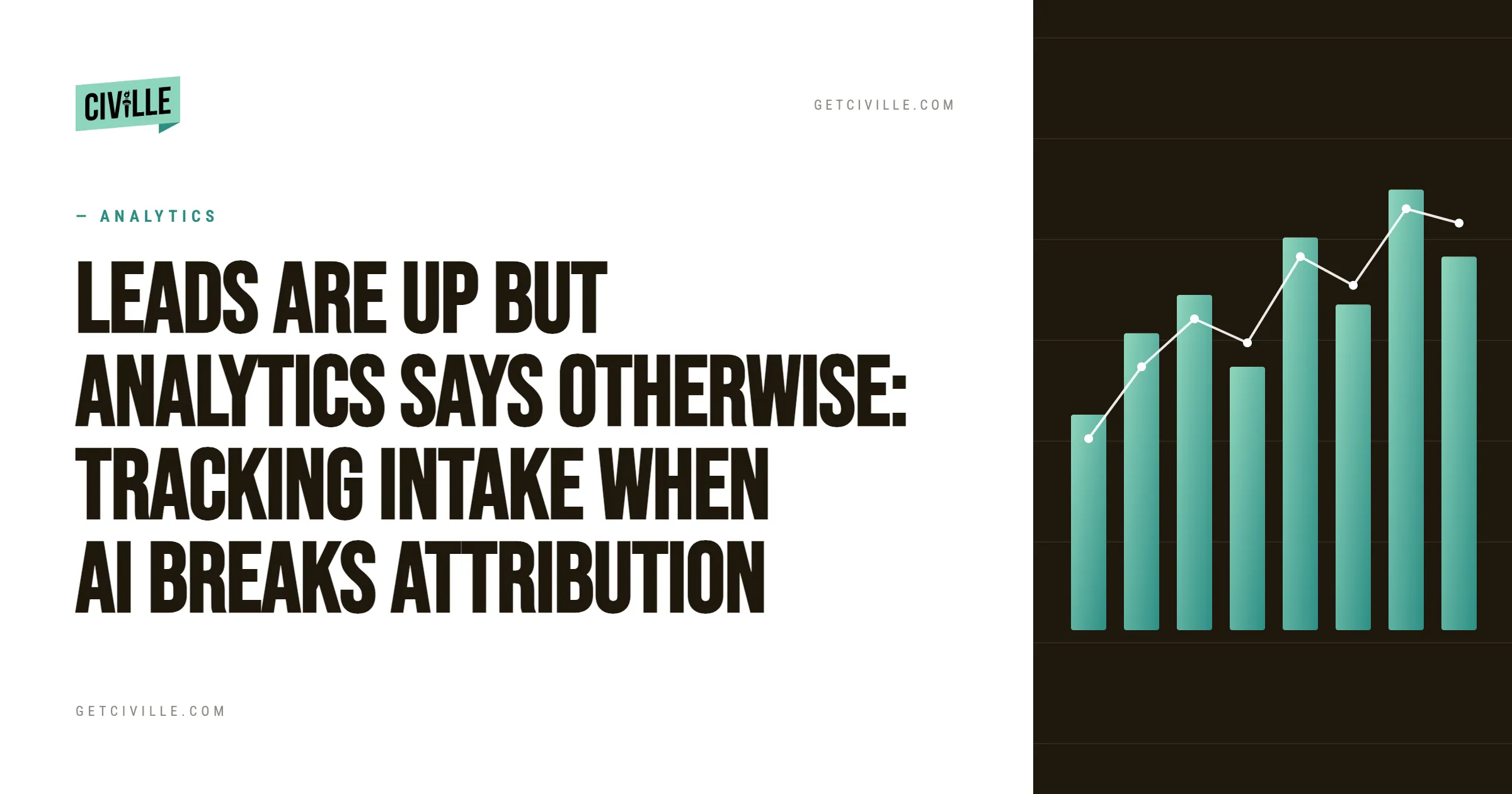
You have seen an increase in online leads for your law firm — but Google Analytics tells a different story of marketing channels that are not converting and organic content that is not reaching potential clients. Something isn’t adding up with your digital marketing and lead generation strategies, and you need to determine where the disconnect is.
When leads are up, but analytics says otherwise, it may point to an issue with the tracking intake when AI breaks attribution. Artificial Intelligence (AI) has changed the game in digital marketing, and while it is a valuable tool, it has created challenges for marketing teams in a number of different ways — including how you track lead attribution.
Civille may be able to help you find a solution and better track your lead attribution.
READ MORE: Explore the OpenAI Model Built for Lawyers and Small Firms
Why AI Search and Zero-Click Are Wrecking Your Analytics Data
The increased use and development of AI by Google, has translated to many law firms seeing an increase in Google Search Console impressions that is complemented by an increase in branded search volume and direct traffic — while organic clicks have become stagnant or declined. This may make it look like specific marketing strategies are not working, when in reality, it is likely not the data that is flawed, but how it is measured and attributed with AI in the mix.

Imagine a scenario where an individual searches for a personal injury attorney near me, and uses AI-powered search results to learn a little more about your law firm — and maybe even visits your site and then leaves. Then a week or two later, that same person who explored your law firm’s website returns via a direct organic search and contacts your legal team for a case review. In most cases, this lead is attributed to the organic search and not the AI platform that first introduced a potential client to your law firm.
With most leads typically attributed to the last touchpoint, AI has changed how last-click attribution is measured with many more Dark Social and untrackable touchpoints. Google Analytics has added a native AI Assistant to help improve lead attribution from AI — but it is not a foolproof tool.
4 Steps to Improve Lead Tracking and Attribution
There are a few steps you can take to improve lead tracking and attribution when AI is involved to improve your understanding of where your leads are coming from
1. Implement Zero-Party Data
Do you need to know where your leads are coming from? The simplest way to find out — just ask. AI tools remove referral data, so the best way to find out where a lead comes from is to ask potential clients. Create mandatory text fields on lead forms to determine where they found your law firm with specific directions and text aimed at AI attribution.
2. Employ Hybrid Attribution
Law firms that rely strictly on software-based, multi-touch attribution may show a large increase in Direct traffic that does not provide you with a lot of valuable data. Implement UTM parameters and first-party cookies to get data on more traditional clicks, and combine it with zero-party data to create a more comprehensive picture of lead attributes.
3. Employ Marketing Mix Modeling
Law firms that have a high volume of leads can discount individual user journeys and look at more collective data. This allows law firms to correlate your marketing budget and brand mentions with intake volume over a set period of time. This strategy also allows you to monitor Dark Traffic by implementing brand-awareness campaigns. When Google Analytics shows no increase in traffic, but an increase in form submissions, it can indicate that the traffic is coming from untracked AI channels.
4. Track Copy and Past Behavior
Many potential clients online will copy and paste text, code, or product descriptions in AI to learn more about a business or product. Law firms can set up custom event tracking in tag manager to provide a notification when a user highlights or copies text. Analytics can then be used to establish a correlation between copy-paste behavior and select landing pages when there are untracked leads.
READ MORE: How Law Firms Should and Shouldn’t Use Claude for SEO and Content
Have you found that your leads are up, but Google Analytics says otherwise? We hope that this quick overview will highlight how tracking intake changes when AI breaks attribution. Learn more about how AI impacts lead tracking and attribution with a few steps you can take to help improve attribution with this guide by Civille.
Contact Civille today to learn more about our custom law firm websites!