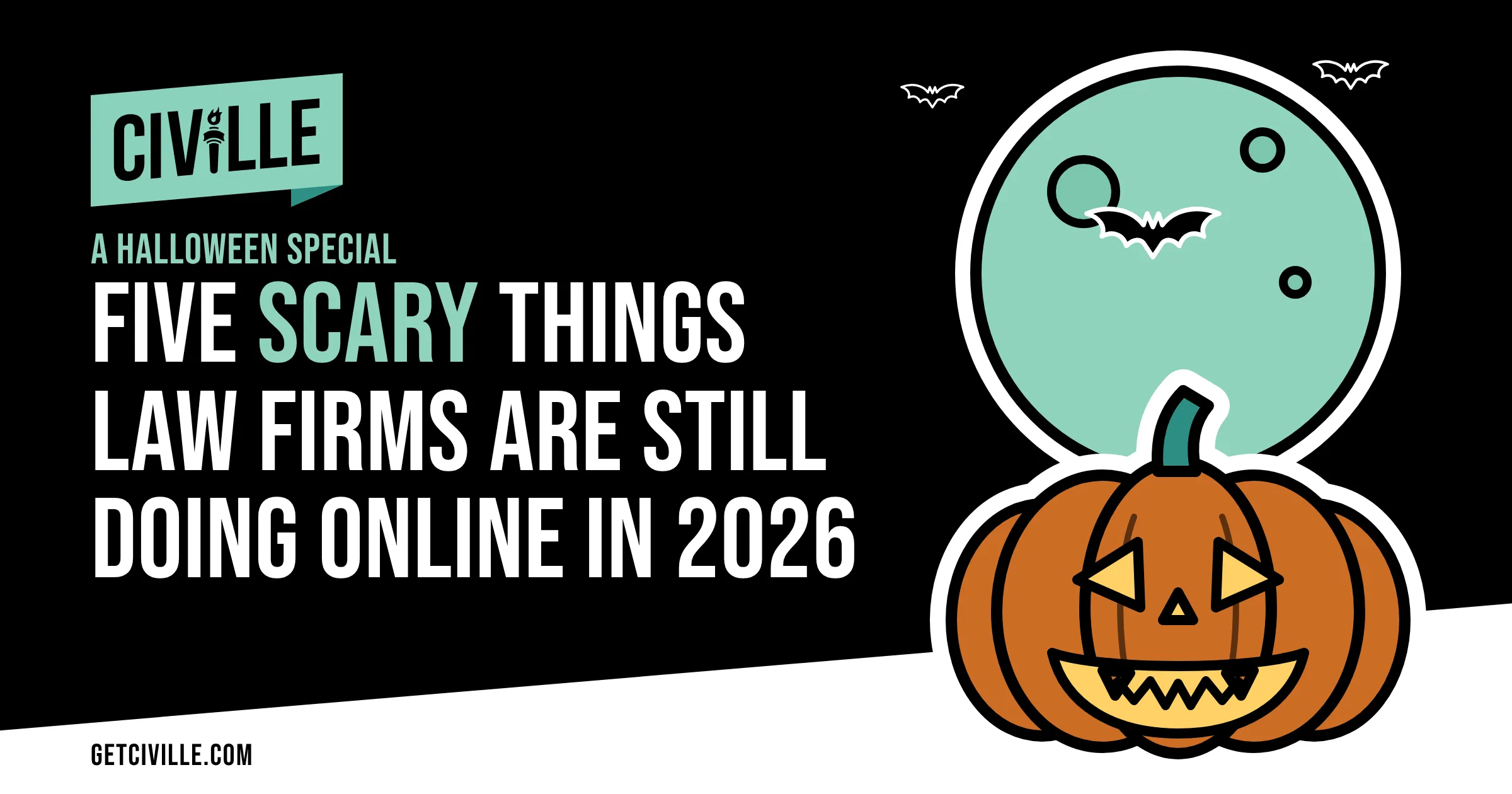
Halloween is the one night a year people go looking for a scare on purpose. Someone searching for a lawyer at 11pm after a car accident or a custody blowup is not one of those people. They want a fast answer, a phone number that works, and some sign that the firm on the other side of the screen is still open for business.
We look at a lot of law firm websites at Civille. Most of them belong to good attorneys who do good work. But every so often we open one that feels like stepping into an abandoned house. The copyright in the footer says 2019. The contact form goes nowhere. The newest blog post is about the office holiday party three Decembers ago.
None of that is fatal by itself. Stack enough of it together, though, and you get a firm that’s quietly handing cases to the competitor down the street without ever knowing it happened. Here are five of the scariest law firm marketing mistakes we still see online in 2026, and how to fix each one before the trick-or-treaters show up.
1. Running a Website That Belongs in a Haunted House
You know the type. Pages that take forever to load. Text you have to pinch and zoom to read on a phone. A stock photo of a gavel, a stack of law books, and a handshake, all on the homepage. A team page still featuring an associate who left in 2021.
Most people looking for a lawyer find you on their phone, usually in the middle of a bad day. They aren’t going to wait around for a slow page or squint through a desktop layout. They’ll hit the back button and call the next firm on the list. Google notices page experience too, so a clunky site can cost you rankings before anyone even visits.
What to do about it: Pull up your own site on your phone, using cellular data instead of the office Wi-Fi. Notice how long it takes before you can actually read and tap anything. Then click through your practice area pages and attorney bios the way a stranger would. If something feels dated, broken, or confusing to you, it feels that way to a potential client too. Our free guide on how to improve your law firm’s page speed walks through the most common culprits. If the problems go deeper than speed, it may be time for a law firm website built around how clients actually search today.
2. Letting Your Google Business Profile Turn Into a Ghost Town
For a lot of local searches, your Google Business Profile is the first thing a potential client sees. Not your website. The map listing, with your hours, your reviews, and whatever photos Google decided to pull.
And plenty of those listings are eerie. Old phone numbers. Holiday hours nobody updated. A few blurry photos from a decade ago. Worst of all, reviews sitting there with no reply, including that one-star review from last spring that everyone in the office has read and nobody wants to touch.
An unanswered negative review often does more damage than the review itself. It tells the next reader that nobody is minding the store.
What to do about it: Log in and check every field: primary category, hours, phone number, website link, and service areas. Add recent photos of your real office and your real team. Reply to reviews, good and bad, in a calm and professional tone. One important note for attorneys: when you respond to a negative review, don’t confirm the person was a client or share anything about their matter. ABA Formal Opinion 496 makes clear that a bad review doesn’t give a lawyer permission to reveal confidential information. A short, polite reply that invites them to call the office is usually the safest route. If nobody in the office has time for this, that’s what Google Business Profile management for law firms is for.
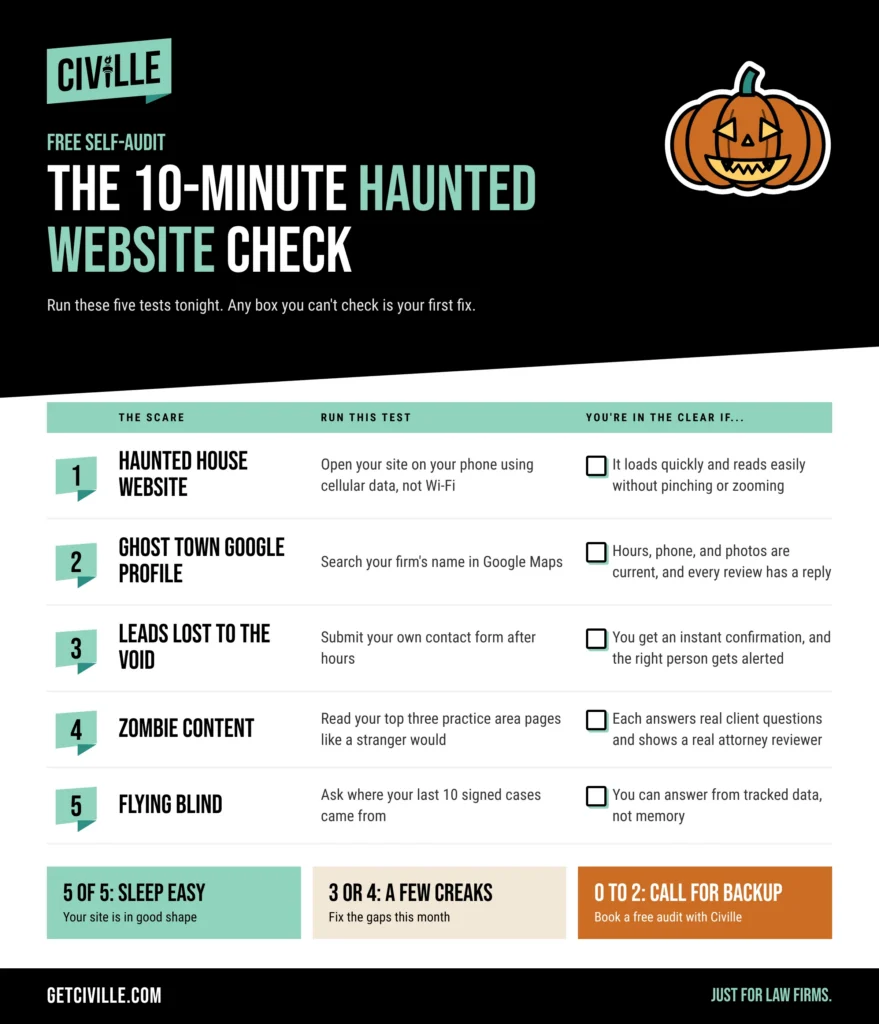
3. Feeding Your Leads to the Void
This one is scary because it happens without a sound. A potential client fills out your contact form at 8:45 on a Friday night. The form sends to an inbox that belonged to a paralegal who left last year. Nobody sees it until Tuesday, if ever. By then, that person has already hired someone else.
We run into versions of this constantly. Voicemail boxes that are full. Contact forms with no confirmation message, so people can’t tell whether it went through. Phone numbers on the website that ring the wrong office.
People in legal trouble rarely contact just one firm. They reach out to a few, and the firm that responds first, clearly and kindly, has a real head start.
What to do about it: Be your own secret shopper. Tonight, fill out your contact form from your phone. Call your main number after hours. Note how long it takes to hear back. Then close the gaps. Send form submissions to a monitored inbox with a text alert, set up an automatic confirmation so people know they were heard, and give visitors a way to book a consultation without waiting on a callback. Civille’s lead generation and intake tools include AI chat and guided forms, and the Civille Scheduler lets after-hours visitors grab a consult time instead of disappearing.
4. Publishing Zombie Content
Zombie content is the stuff that shambles around your site without ever really being alive. Practice area pages with two thin paragraphs. Fifty “location” pages that are the same text with the city name swapped out. Blog posts churned out in bulk by an AI tool and published without anyone checking whether the law they describe is even accurate in your state.
Google is running out of patience with it. A spam update started rolling out in late September, and on October 1, Google added new language to its guidance on helpful, people-first content warning site owners against deceptive authorship. That covers invented author personas built with AI-generated headshots, made-up names, or fake credentials. In Google’s words, “Any form of deception makes a page untrustworthy to both users and our automated quality systems.” (Search Engine Journal has a good rundown of the change.)
For law firms there’s a second layer. Bar rules on attorney advertising, including Rule 7.1’s prohibition on false or misleading communications, apply to your website too. A fake byline isn’t only an SEO problem.
What to do about it: Audit your content with fresh eyes. Merge or rewrite thin pages so each one answers the questions clients really ask. Retire copy-and-paste location pages, or rebuild them with information that’s truly local. Use honest bylines. If your marketing team drafts a post and an attorney reviews it, say so with a “Reviewed by” line linked to a real bio with real credentials. And fact-check everything, especially AI-assisted drafts. Strong law firm SEO and content marketing is built on pages people want to read, written for clients first and search engines second.
5. Flying Blind on What’s Actually Working
Ask some firms where their last 10 signed cases came from, and you’ll get a long pause. They’re paying for ads, a directory listing or two, maybe a Little League sponsorship, and they have no clear picture of which of those brings in clients and which just brings in invoices.
It usually goes like this. Google Analytics was set up years ago by someone who’s long gone. Phone calls aren’t tracked. The monthly report shows clicks and impressions, but nobody ties those numbers to consultations booked or retainers signed. Meanwhile, more people are starting their search by asking AI tools to recommend a lawyer, and most firms have no idea whether their name comes up in those answers at all.
What to do about it: Track every lead from the first touch to the signed retainer. Use call tracking so you know which calls came from which source. Ask every new client how they found you, and log the answer in your intake system. Review the numbers monthly and move budget toward whatever is signing cases. If you run paid campaigns, law firm digital advertising should come with reporting a busy attorney can read in five minutes. And if you’re wondering how AI tools see your firm, our free guide on how to get your law firm cited in AI is a smart place to start.
The Scariest Part? All of This Is Fixable
None of these problems call for tearing everything down and starting from scratch. Most firms can knock out a few in a single afternoon: update the Google profile, test the contact form, delete the page about the practice area you dropped in 2022. The bigger projects, like a site rebuild or a real content strategy, just need a plan and someone to own it.
What keeps us up at night isn’t any single mistake. It’s how long these issues can sit unnoticed while potential clients quietly move on. Once you know where to look, though, they stop being so frightening.
If you’d like a second set of eyes, reach out to the Civille team for a free website audit. We’ll look at your site, your Google profile, and your intake process, then tell you what we’d fix first. No tricks. Maybe a treat or two.