We’ve seen new releases of ad platforms before, often with a lot of hype surrounding them. When ChatGPT announced they were running ads, it was met with a very mixed reception. Some were wondering if GPT would be dying overnight, others were wondering if this would be the future of advertising. It was guesswork at best, but now we have some actual data to see where this OpenAI ad platform is actually driving results and where it is falling short.
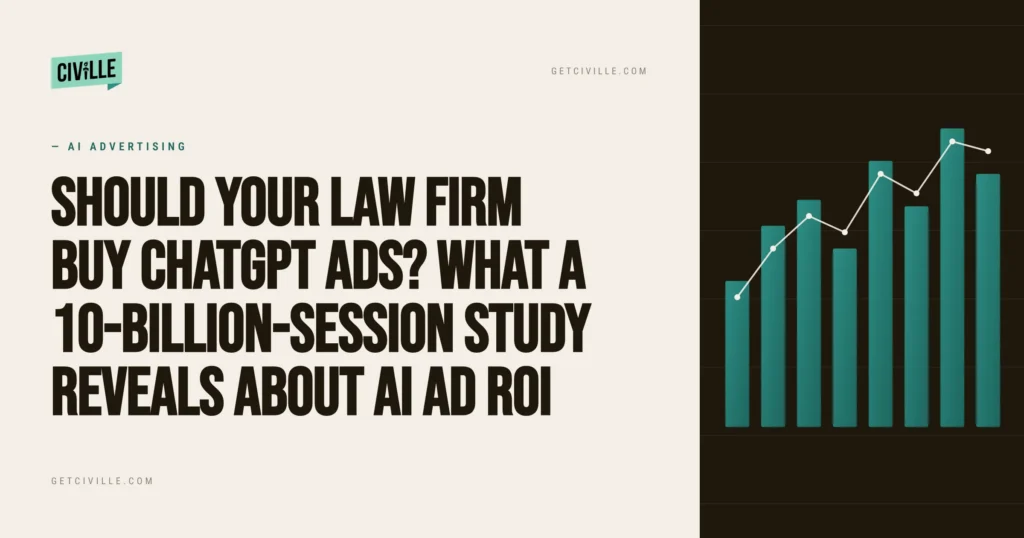
According to a study reported by Search Engine Land and conducted by economists at the Vienna University of Economics and Business (WU Vienna) and the Frankfurt School of Finance & Management, ChatGPT ads generate 64% less revenue per visit than Google Search ads. That’s huge, and not in a good way.
This was no small study either. It analyzed 10 billion user sessions across over 1,800 websites over the course of a little more than a year. Unsurprisingly, they found that ChatGPT is being used to research complex questions, and when an ad popped up in that research, it did generate a fair amount of clicks, but that’s where it stops. Those clicks rarely translated into anything more than just that, a click. No call, no form fill, no conversion.
The flip side was even more interesting. The unpaid organic ChatGPT clicks led to dramatically better outcomes with more conversions even than a Google Ad click. The initial results seem to point to one conclusion. You can’t buy conversions through ChatGPT, but you can still earn them.
If you take away nothing else from this blog, leave with that. AI is important to your marketing, but paid AI ads are not yet a safe bet. Things can always change, ads can improve, but for now ChatGPT isn’t a worthy ad platform for law firms. We can go through the data to show just that.
Why Google AI Overviews Are Intercepting Branded Search for Lawyers
By the Numbers: ChatGPT Ads vs. Google Search Ads
If you need the numbers, we brought the receipts straight from the data set that WU Vienna and Frankfurt School provided. Here is a side-by-side of ChatGPT advertising, traditional Google Ads and organic ChatGPT referrals.
| Performance Metric | Paid ChatGPT Ads | Paid Google Search Ads | Unpaid (Organic) ChatGPT Referrals |
| Revenue Per Visit (U.S.) | $0.89 | $2.45 | $3.27 |
| Conversion Rate | 0.37% | 1.17% | 1.99% |
| Advertiser Win Rate | 3% earned more on ChatGPT | 97% earned more on Google | N/A (Earned Media) |
| Zero-Conversion Rate | 84% of advertisers got 0 conversions | Standard baseline conversions | High-intent referral conversions |
| Estimated Return on Ad Spend | ~$0.52 per $1.00 spent | ~$3.40 per $1.00 spent | Infinite (Organic GEO) |
The study’s deeper findings highlight just how wide the performance gap is for advertisers:
- Underperformance Across the Board: Out of 87 advertisers running campaigns on both platforms, 97% earned less revenue per visit from ChatGPT than from Google Search.
- Zero-Conversion Trap: In the study, 84% of ChatGPT advertisers recorded zero conversions despite paying for over 18,700 clicks. In fact, 76% of all U.S. ChatGPT revenue came from a single large enterprise brand. In other words, the actual picture may be more bleak than these broad figures show.
- Broken CPC Economics: Researchers calculated ChatGPT clicks would need to cost $0.26 to match Google’s ROAS. Actual pricing showed $1.72 per click. Unless those click prices come down, that is an insurmountable gap.
You may be thinking, yes, but this study isn’t for legal. Legal is a whole other animal. And we agree with you. Legal is often harder to earn conversions in, and we’ve seen it from a few firms that have tried this themselves. You can get the clicks, but the conversions from ChatGPT are few and far between.
Why ChatGPT Ads Fail the Legal Conversion Test
So why are these numbers for ChatGPT ads so bad? Why do we see a conversion rate that is almost four times higher on Google Ads? It may just lie in the intent of a ChatGPT session and where that intent sits inside the sales funnel.
1. Exploratory Context vs. Immediate Crisis Intent
When a user opens a chat in ChatGPT, they’re usually in an exploratory, top/mid-funnel mindset.
Picture this scenario. Someone prompts ChatGPT to understand a complex legal situation for their business. Maybe they think their partner is embezzling and they want to check state laws, understand legal options, and look into freezing their accounts. Do they need a lawyer? Most definitely, but they are not ready to pull that trigger yet. They are still trying to figure out their options, understand the vocabulary, and educate themselves.
If a sponsored link pops up, the user may click out of curiosity, but more likely this result is interrupting their flow, and even after they click they will just end up back in the chat, asking more questions and further clarifying their decision.
When they do decide to find a lawyer, they go back to the old methods. They ask Google, and now you have a chance to engage them with a Google ad. We catch them when they are no longer looking for an AI discussion. We catch them when they want a number to call and with any luck they find it from your Google Search ad or your Local Service Ad.
Read More: Three Local Services Ads Changes Hitting Law Firms This Fall
2. “Sponsored” Trust Deficit in YMYL Environments
When someone is buying shoes or looking for a plumber, they want brands and people that they can trust. When it comes to legal, that trust bar is even higher.
When ChatGPT naturally recommends a lawyer or any service, it is looking for those trust signals, and it’s ready to back up those recommendations with everything it found from Yelp reviews to news articles. ChatGPT surfacing a link with a sponsored tag on it doesn’t hit the same way, and the data shows that.
While a sponsored ad in ChatGPT may generate a conversion rate of 0.37%, organic results get far more than that with a conversion rate of almost 2%. This means it outperforms Google Ads too. So the art form here turns into making sure you are mentioned more often on ChatGPT and other AI engines like Gemini and Claude.
The Hidden Warning: Organic AI Real Estate Is Shrinking
Unfortunately, there is another side to this. If sponsored results are becoming the norm, then much like what happened with Google as more and more paid advertising opportunities came online, your real estate for organic is shrinking.
We see this in the data too. Right after OpenAI launched its ads, organic referral clicks dropped almost 6%. And that’s only part of the picture because as the clicks dropped, the adoption rate of ChatGPT only grew, so that’s more like a 7-8% drop.
Now, it is also worth pointing out that ChatGPT ads only appear on the free and the new “Go” tier. For now, this splits the audience, but as advertisers and shareholders put more pressure on OpenAI and ChatGPT to turn its massive user base into a profit engine, ads will likely only grow, branching out into higher paid tiers and shrinking the number of organic clicks faster.
As with everything related to online advertising, SEO, and AI, it is an evolving situation. The things that are true now may not be true in 6 months. It’s a space worth watching, but for now, keep your ad spend where it is and focus on earning some organic traction with AI. Civille can help you do that.
The Two-Stage Legal Funnel: Where to Allocate Your Budget
The takeaway isn’t that ChatGPT is useless. It proves law firms are using the wrong tool for the wrong funnel stage.
Stage 1: Capture Research in ChatGPT via Organic GEO (Not Ads)
Invest in Generative Engine Optimization (GEO) to win unpaid, high-trust recommendations.
- Replace generic brochures with scenario-specific legal guides answering actual ChatGPT prompts.
- Implement LegalService/Attorney schemas so crawlers verify your credentials unambiguously.
- Maintain airtight consistency across websites, bar profiles and directories for LLM sentiment validation.
Stage 2: Close High-Intent Leads on Google Search
When prospects move from ChatGPT education to hiring intent, they migrate to Google. This is where your paid budget belongs: protect high-performing Google PPC/LSA campaigns where conversion rates triple ChatGPT’s and intent is immediate.
Tracking Intake When AI Breaks Attribution
The Verdict: Skip Shiny Ads, Build the Authority Engine
If you were looking for where to spend your marketing budget in 2027, it goes back to your website. Paid ads are great, and the same tried-and-true Google Search Ads and Local Service Ads are still where we’d recommend your paid advertising dollars go. You also can’t be sleeping on your website and your online presence. You need the trust signals to ensure that AI like ChatGPT, Gemini, and Claude are mentioning you naturally and organically.
If you are just too curious about ChatGPT advertising, you can try it, but the results likely won’t be there just yet. As ChatGPT pushes advertising as a source of revenue for their company, that equation may change and ChatGPT ads may be a new go-to in the industry, but the numbers do not prove that yet.
If you need help ensuring that you show up where you need to in AI or want to revamp your legal paid advertising, Civille is here to help. Reach out to us today to see what Civille can do for you and your firm.