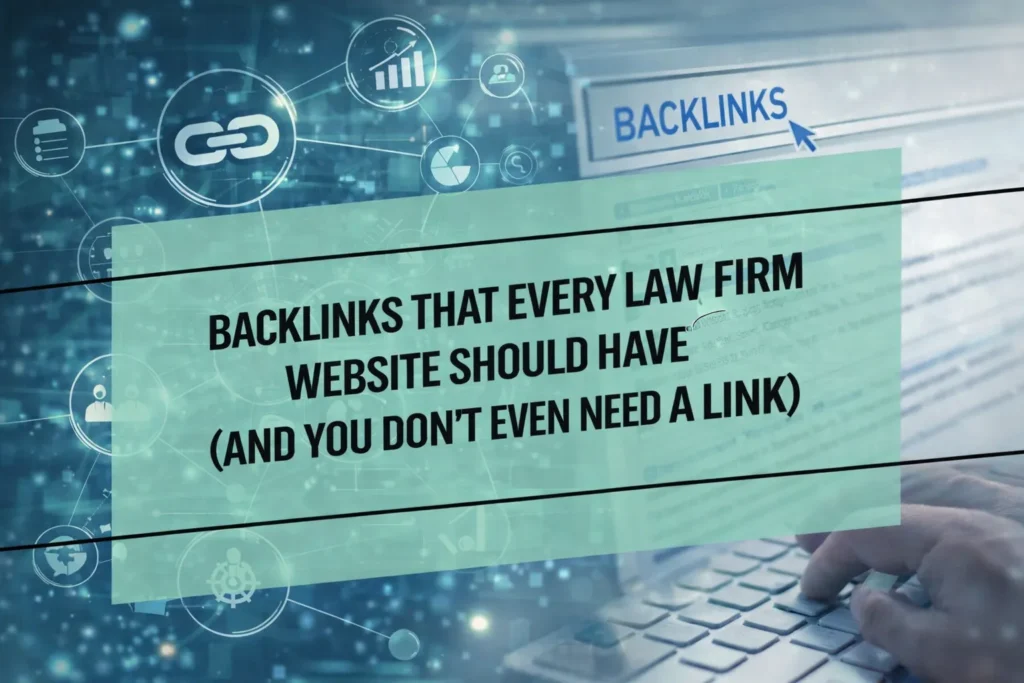
Law firm SEO conversations tend to fixate on one thing when the topic of links comes up: who is linking back to your site. That is not a wrong instinct. Inbound links from authoritative sources are still a meaningful ranking signal. But it is an incomplete picture, and for most firms, it is also the wrong place to start.
There is a category of off-site presence that functions differently from a traditional backlink but carries significant weight with Google, and increasingly with the AI models that are now shaping how potential clients find legal help. These are listings, profiles, and citations — and many of them do not pass a link back to your site at all. What they do pass is something arguably more valuable right now: confirmation that your firm is a real, credible, active entity.
Google AI Overviews, ChatGPT, Perplexity, and Gemini are not just reading your website. They are reading the broader ecosystem of information that exists about your firm across the web. When that ecosystem is thin or inconsistent, your firm gets passed over in favor of one that looks better documented. When it is complete and consistent, you become a firm that AI can confidently surface — and recommend.
Now don’t get me wrong – your website has to do its part too. Optimizing your site for AI visibility — through schema, structured content, FAQ sections, and social proof — is the foundation. You need to be fully optimized in the “home base” that is your website first. The off-site presence can then reinforce it. One without the other can leave a gap.
Here is where to start building that off-site presence.
Core Platforms Are Non-Negotiable
Google Business Profile is the single most important listing your firm can have. It feeds directly into the local pack, influences AI-generated answers for local queries, and functions as a standalone destination for potential clients who are ready to call. If you have not claimed and fully built out your profile, that is the first thing to fix.
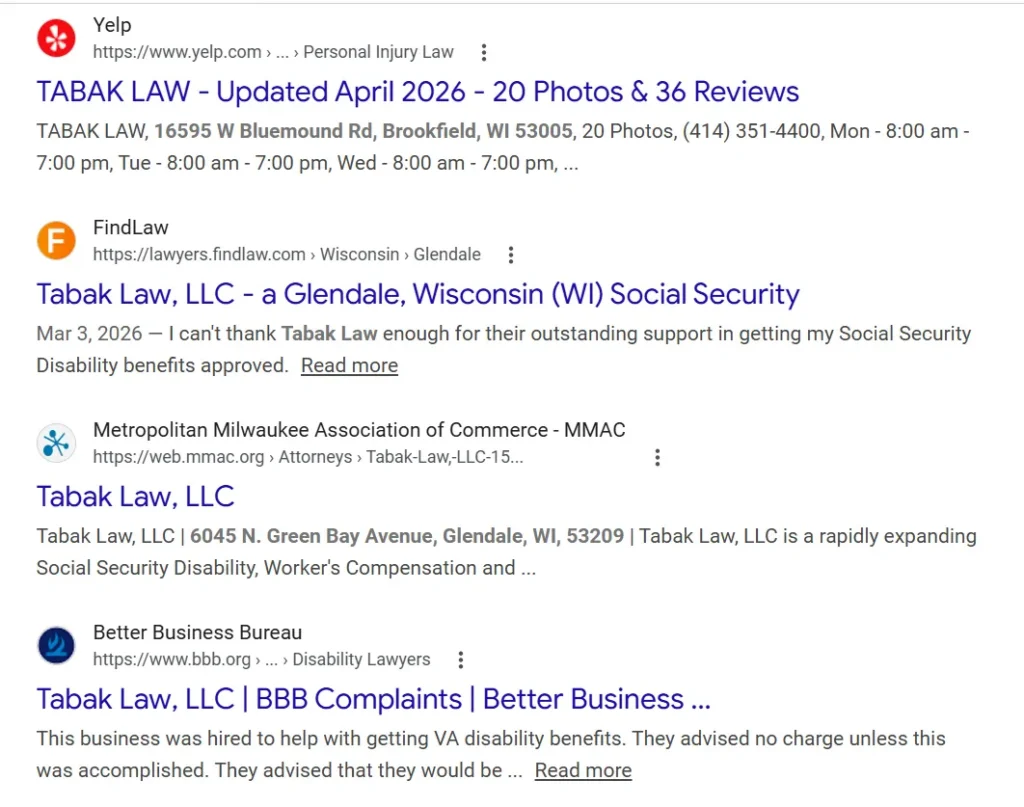
Beyond Google, Bing Places for Business and Apple Business Connect are platforms that many firms overlook entirely. Bing powers a meaningful share of searches — and it powers Copilot. Apple Maps is the default navigation and local search tool on every iPhone. Both feed into AI ecosystems that are increasingly part of how people find attorneys. Claiming your listing on each of them costs nothing and takes little time.
Yelp rounds out the core platforms. It is a trust signal. Potential clients check it, and so do the models that aggregate reputation data.
Legal Directories Still Matter, But You Don’t Neccessarily Need to Pay for Them
The major legal directories built significant authority over many years. Avvo, Justia, FindLaw, Lawyers.com, and Martindale-Hubbell are all recognized sources that Google and the major AI platforms treat as credible references for attorney information. Getting your firm listed on them still provides value.
While the experience varies a bit from platform to platform, you often don’t need to pay anything to get the link value. Most of these platforms offer a free profile, and that is what you are after — the trust signal that comes from being a verified, listed attorney on a recognized legal directory. When you create or claim your profile, expect to be presented with upgrade options. That upsell is part of their business model. For the purposes of AI visibility and citation authority, the free listing accomplishes what you need (it’s up to you if the paid options are beneficial for your firm).
Create the profile. Fill it out completely with accurate, consistent information. And if you want, you can leave it at that.
Citation and Data Aggregators Build Consistency
AI models and search algorithms use data aggregators to verify that a business is who it says it is. Consistent name, address, and phone number data across platforms is one of the clearest signals that your firm is a legitimate, established entity.
Yellow Pages, the Better Business Bureau, and your local Chamber of Commerce listing are not glamorous. They are not going to drive a wave of direct traffic. But they contribute to a web of consistent citations that corroborates your firm’s information and strengthens how you appear across the broader data ecosystem. A BBB listing, in particular, carries a trust connotation that extends beyond pure SEO value.
Professional Listings Add Credential Signals
Your state bar directory listing and any county or local bar directory listings are among the highest-authority citations a law firm can have. Bar association websites carry institutional credibility that legal directories and general platforms simply cannot match. When an AI is determining whether your attorneys are genuinely licensed practitioners, bar directory listings are among the clearest verification points available.
LinkedIn is equally important, and it is underutilized by most firms. Both individual attorney profiles and a firm page contribute to your presence in the ecosystem. LinkedIn profiles appear prominently in branded searches and are crawled and referenced by AI models assessing professional credibility. A complete attorney profile with practice area detail, bar admissions, and a firm affiliation does meaningful work in establishing that your attorneys are real, qualified, and findable.
Sponsorships and Referral Partners Are Often the Most Overlooked Source
Community sponsorships — a local event, a nonprofit, a school or youth organization — frequently result in a link from an organization’s website that carries genuine local authority. These are among the most natural links a law firm can earn, and they come with added benefits that extend beyond SEO. They signal community investment, which resonates with both potential clients and the AI models that assess firm reputation.

Referral relationships with other attorneys or professional service providers offer a similar opportunity. If your firm regularly refers clients to an estate planning attorney, a financial advisor, or another practice area, there is often a mutual benefit in formalizing that with a link exchange. These links are relevant, locally grounded, and earned through real professional relationships — exactly the kind of signal that holds weight in the current search environment.
You Are Building an Ecosystem, Not Just a Backlink Profile
The point of this list is not to manufacture links. It is to ensure that your firm is fully and accurately represented everywhere a potential client — or an AI model — might look for confirmation that you are legitimate, active, and worth recommending. Your website does the work of demonstrating expertise. The platforms above do the work of corroborating it.
Most of these are free… although they take some time to set up. The fact is, though, that every one of them contributes to an off-site presence that makes your firm harder to overlook.
If you want help building out and managing these listings, that is something we can do alongside your broader digital strategy. But the list above is yours to act on regardless — and the sooner you do, the sooner that ecosystem starts working for you.