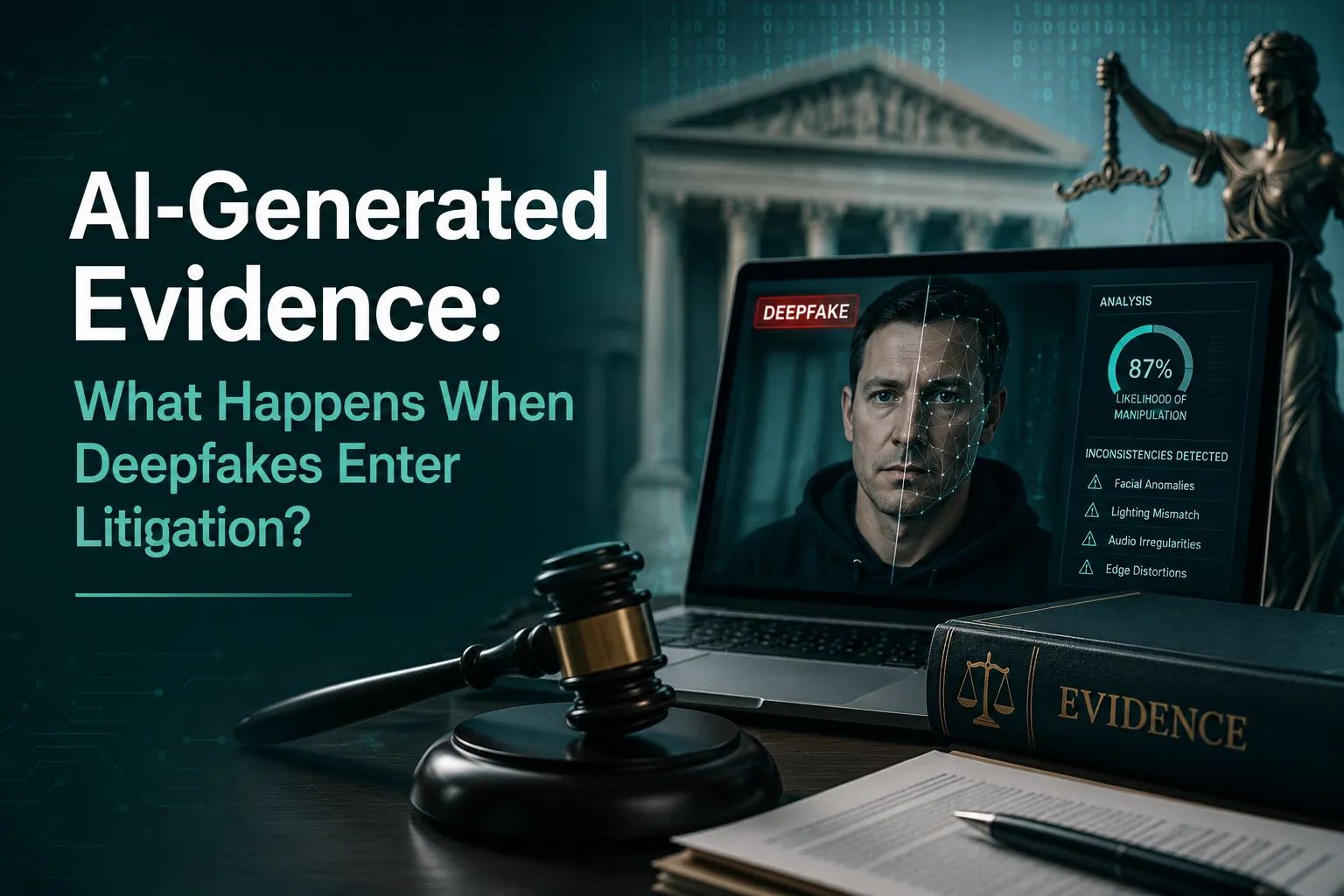
Artificial intelligence is changing the way people communicate, work, and create content. It is also changing the kinds of evidence that show up in court. Today, AI tools can create fake videos, audio recordings, photos, and even realistic-looking screenshots of text messages. These are often called “deepfakes.” As this technology becomes easier to use, courts and lawyers are facing serious questions about what evidence can be trusted.
This is becoming an increasingly common issue in modern lawsuits. Concerns over fake digital evidence already abound in family law cases, personal injury claims, employment disputes, criminal cases, and business litigation. Now, judges, lawyers, and legal tech companies are trying to figure out how to solve these problems fairly.
With concerns growing, more lawyers are paying attention to AI-generated evidence and its potential impact on litigation.
What Is a Deepfake?
Deepfakes are fake digital content that has been created or modified using artificial intelligence, including videos, voice recordings, images, emails, text messages, and documents. While some deepfakes are obvious jokes or entertainment, others are designed to look real and fool people.
For instance, AI software can generate a screenshot of a text that makes it look like someone said something they actually didn’t. A fake audio recording could imitate a person’s voice. A fake video could make someone appear to commit an act that never happened. AI can even generate believable screenshots of conversations or emails.
Creating fake evidence once required advanced technical skills. Today, however, many AI tools are simple enough for almost anyone to use. Some programs can create convincing fake content in just a few minutes.
That creates major concerns inside the legal system.
Why Deepfakes Are a Problem in Court
Courts rely heavily on evidence. Judges and juries make their decisions based on documents, videos, witness testimony, phone records, photos, and recordings. If false evidence is brought into a case, it can affect the result.
The danger with deepfakes is that they can look believable at first glance. You can watch a video or listen to an audio clip and instantly believe it’s real. In some cases, the evidence could have been changed without people even knowing it.
This causes a number of serious problems:
- False accusations can be supported by fake evidence
- Real evidence can be argued to be fake, even if it is real
- Courts may need to spend significant amounts on experts to examine digital files.
- Lawyers will have to examine evidence more closely, and litigation could take longer.
- Overall, judges and juries may become more skeptical of digital evidence
Such fears are already impacting genuine legal struggles.
How Courts Decide Whether Evidence Is Real
Courts already have rules about evidence. Before evidence can be used, the party offering it usually must show that it is authentic. That means they must show the evidence is what they claim it is.
For example, if somebody sends a text message, they may have to prove where it came from. If they submit a video, they may need to explain who recorded it and when.
It’s more complicated when it comes to AI-generated content.
Now, lawyers may have to dig through digital files. They might look at metadata, timestamps, editing history, device logs, or other technical data. Sometimes courts hear testimony from digital forensic experts trained in examining electronic evidence.
Judges are empowered under evidentiary rules to exclude evidence they deem to be unreliable, misleading, unfairly prejudicial, or not sufficiently authenticated. The bad news is that deepfake technology is advancing quickly, and some fake content may be hard to detect without special tools.
Could Someone Be Punished for Using Deepfake Evidence?
Yes, presenting false evidence in court is usually accompanied by serious consequences. The court can punish a person who knowingly gives false evidence. In some cases, they could also be charged with crimes such as obstruction of justice, fraud, or perjury if they say things under oath that aren’t true.
Lawyers have ethical obligations as well. They cannot knowingly offer false evidence to the court or allow false testimony to mislead the court. If a lawyer believes evidence may be false, they may have a duty to investigate.
Courts do not take evidence tampering lightly. The legal system relies heavily on honesty and reliability.
The Growing Fear of “The Deepfake Defense”
Another issue is beginning to appear in litigation. Some people now argue that real evidence is fake simply because AI exists.
For example, a person accused of wrongdoing might claim that a real recording was created with artificial intelligence. Even if the recording is genuine, the existence of deepfake technology can create doubt.
This is called “the deepfake defense” by experts, and it could make litigation more difficult, as parties may spend more time disputing authenticity rather than the facts at issue. It might also raise costs as experts may be needed more often.
That puts pressure on the courts to establish clearer standards for handling digital evidence.
How Technology Companies Are Responding
Tech companies and legal tech platforms are already working on tools to identify manipulated content.
Some programs analyze metadata, file signatures, and editing patterns. Other systems attempt to check whether a file was created or modified.
Meanwhile, AI tools continue to get better. This creates an ongoing race between programs designed to create fake content and programs designed to detect it. Therefore, many lawyers believe that in the future, the verification of evidence will become much more relevant.
The legal industry may also focus more on chain-of-custody procedures, secure digital storage, authentication systems, and forensic analysis.
Why This Matters for the Future of Litigation
Courts are evolving to meet the rise of artificial intelligence. Digital evidence plays a huge role in today’s litigation, and that’s not likely to change anytime soon.
Videos, text messages, emails, social media posts, and voice recordings are common in many lawsuits. As AI tools become more sophisticated, courts will have to find reliable ways to sift real evidence from manipulated material.
This problem is not unique to criminal law. Deepfake concerns may appear in divorce cases, custody disputes, employment claims, business litigation, insurance disputes, personal injury cases, and many other areas of law.
For legal professionals, the challenge is becoming clear. Technology can create powerful evidence, but it can also create convincing deception.
As courts adapt to these changes, knowledge of AI-generated evidence may become increasingly important for lawyers, judges, companies, and others involved in litigation.
At Civille, we get that technology is changing the legal industry at lightning speed, and we know how to help. Legal professionals are facing new challenges that didn’t exist just a few years ago, from evidence review to digital communication. As the debate on AI-generated evidence heats up, understanding the increasingly common problems in legal technology will help firms prepare for the future of litigation.