
Whether you like it or not, artificial intelligence is quickly becoming part of the legal industry. Law firms are using it to draft emails and summarize long documents. While this tool can help transform your workflow, there’s another side to it. And judges across the country are starting to feel the headaches.
This technology is helping lawyers work faster, but it is also inventing information that looks real. And this is where AI-hallucinations are creating real problems for lawyers and judges.
These are not minor spelling errors or harmless mix-ups. When AI doesn’t know an answer, it can fabricate court cases. Along with that, it creates quotes from opinions that were never written and relies on legal principles that do not exist.
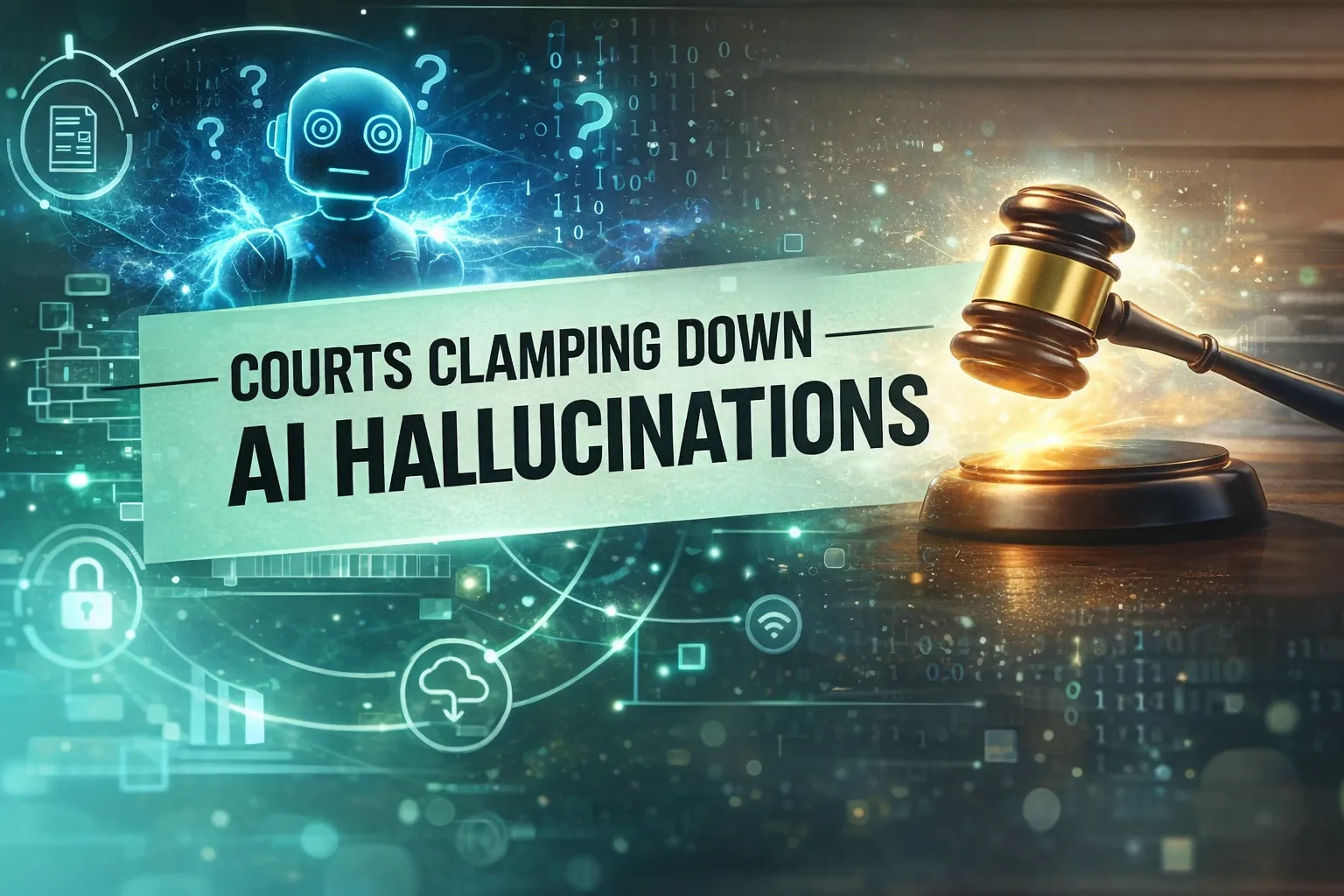
These shortcuts have become a professional responsibility issue. Now, courts are clamping down on AI hallucinations.
So, why is AI creating these blatant errors? And why are courts starting to push back?
Let’s look at one case that shows how quickly things can spiral when AI-generated research goes unchecked.
AI Is Creating New Headaches for Courts and Lawyers
If you’ve spent any time using AI tools, you know that they can be impressive. You can input a prompt and have a memo drafted in seconds. They can even summarize a deposition transcript or help outline a brief.
But there is one concerning flaw. When AI does not know something, it does not admit that uncertainty. Instead, it improvises and makes things up.
When it comes to facts in a legal case, improvisation is not something that anyone wants from their research tools.
Legal analyst Damien Charlotin has been tracking AI‑related filing issues since 2023. And the trend is raising eyebrows across the legal industry.
In 2025, almost 300 pro se litigants filed documents containing these AI-generated citations. While that is the self‑represented side of the equation, lawyers and other legal professionals are also finding themselves in these precarious situations.
Reports from Bloomberg Law have identified more than 550 publicly documented cases where AI-generated hallucinations appeared in court filings. The scary part is that the number represents only a fraction of the total. Many times, these cases are corrected before they reach published opinions or disciplinary proceedings.
You better believe that courts are noticing, and they are responding.
The Case That Put AI Hallucinations on the Radar
Writing a brief is standard practice in the legal industry, and thousands are submitted each day. But one law firm learned the hard way why relying on AI for research can backfire.
This cautionary tale comes from Mata v. Avianca, Inc. The lawsuit itself was routine. A passenger sued Avianca over an alleged injury that occurred during a flight. However, the actions of the plaintiff’s attorneys at Levidow, Levidow & Oberman made headlines.
They prepared a legal brief and needed supporting case law. But instead of relying on traditional legal databases, one of the attorneys turned to ChatGPT for help with research.
The AI responded confidently. It produced several cases that supported the attorney’s legal argument. The citations looked real, with persuasive summaries. So, the lawyer included them in the court filing.
Unfortunately, there was just one problem: these cases did not exist.
When Avianca’s attorneys went to locate the cited opinions in legal research databases, they came up empty. They could not find anything in Westlaw, LexisNexis, or federal records to support their claims. In short, the cases were complete fabrications.
Judge P. Kevin Castel ordered the lawyers to provide copies of the cited opinions. They submitted a response. But once again, the attorneys relied on AI. The submitted documents appeared to contain legitimate cases, but there were additional inaccuracies.
At that point, the situation was more than a mistake. It was an ethical issue.
Judge Castel issued sanctions against the attorneys. He stated that they failed to uphold the fundamental principle of legal practice. All lawyers have a professional duty to verify the accuracy of the authorities they present to the court. By using AI for legal research, they violated that duty.
The attorneys were fined and required to notify the judges referenced in the fabricated decisions.
While this may have been a footnote, the case did not disappear. Instead, it became a landmark moment in discussions about AI in the legal profession.
Bar associations, law schools, and ethics panels used it as an example of both the promise and the risks of AI technology.
With a landmark case, you would think that many legal professionals would shy away from these tools, but the issue hasn’t disappeared.
Despite the attention the case received, hallucinated citations have continued appearing in courtrooms across the country. In the last few years, these situations have come to light:
- One case came before the Connecticut Supreme Court. In early 2026, the Court reviewed appellate briefs that contained computer‑generated inaccuracies in a dispute between a tenant and landlord. Many of the citations the plaintiff cited did not exist.
- U.S. District Judge Janet C. Hall fined a New York attorney $500 for submitting a brief containing a fabricated case. Judge Hall stressed that courts must confront “so‑called ‘hallucinated’ citations.”
- A Miami-Dade County, Florida lawyer used generative AI to cite nonexistent cases. These actions are now part of a lawsuit against the city.
- In 2025, a Texas‑based attorney licensed in Indiana submitted briefs containing nonexistent cases three separate times. A U.S. Magistrate Judge recommended a $15,000 sanction for not verifying AI’s output.
Why Judges Are Starting to Crack Down
Judges are not just mildly irritated by AI hallucinations in legal filings. For many courts, this has turned into a growing administrative headache.
When a lawyer submits a brief that cites a case that doesn’t exist, the court has to stop and figure out what went wrong. This process takes time.
A single hallucinated citation can trigger a large amount of work inside the courthouse. Clerks may have to search multiple legal databases to confirm whether the case exists anywhere in the federal or state system.
Additionally, the judges need to issue formal orders requiring attorneys to explain the citation or to produce the underlying opinion.

All this can push back court schedules. Most importantly, AI hallucinations can show that a lawyer failed to meet their ethical obligations. A single fabricated citation can derail the normal flow of a case.
When you multiply that by dozens or hundreds of filings across the country, the burden becomes overwhelming.
With AI not going away, judges across the country are using guardrails to prevent AI‑related chaos. Some of them include:
- Requiring attorneys to disclose whether AI was used in drafting a filing.
- Certifying that all citations have been manually verified.
- Issuing fines or disciplinary action for hallucinated content.
The goal is not to ban AI, but to ensure accountability from those in the legal field.
What This Means for Lawyers and Your Legal Content
From drafting outlines to organizing research notes, these AI tools can save lawyers a surprising amount of time. And it is not going away any time soon.
But in cases like Mata v. Avianca, Inc., one thing has been crystal clear: AI can help you write, but it cannot think for you. According to LawFuel, even legal‑specific AI tools produce incorrect information more than 17% of the time.
AI predicts words and patterns. That means it can produce text that sounds completely convincing, even when the information is false.
In most industries, that is frustrating. In the legal profession, it can be a serious problem.
A fabricated citation in a blog post is embarrassing. A false citation in a court filing can lead to sanctions.
Anyone creating legal marketing content needs to treat AI the way you would treat a brand-new research assistant: helpful and capable, but still in need of supervision.
In other words, AI can help draft the words, but lawyers still have to stand behind them.
The Courts Are Losing Patience with AI Errors
Courts are clamping down because the integrity of the legal system is at stake. The legal profession depends on accuracy and credibility. When attorneys rely on unverified AI, it threatens these ethics.
The responsibility lies with legal writers and anyone drafting documents for the court. Technology is powerful. However, it is only as reliable as the person using it.
AI can speed up drafting and help organize research. But in the end, the lawyer submitting the work still has to stand behind it
That same principle applies to legal content outside the courtroom.
AI can help draft the words, but it cannot think for you. Courts, bar associations, and ethics panels are all watching how technology is used, with sanctions becoming more common.
Whether a lawyer or legal content creator, remember that research, verification, and accountability matter.
At Civille, accuracy is built into every article. You receive legal content you can rely on today and tomorrow. Find out how we can help you create accurate content that stands up to scrutiny.
Contact Civille today to learn more about our custom law firm websites and digital marketing services for law firms!